Best Facebook Comment Auto Reply Tools for Ecommerce Stores in 2026
A customer comments "price?" on your Facebook ad at 11pm. If nobody replies before morning, that shopper has already bought from someone else. This is why stores start hunting for comment auto reply tools, usually after losing sales they never saw.
This guide breaks down what actually matters: comment triggers, DM routing, order support, pricing models, and scalability. You will get a clear comparison of seven tools, concrete selection criteria, and one standout pick so you can commit to a platform with confidence.
What to Look For in Facebook Comment Auto Reply Tools for Ecommerce
Selecting the right Facebook comment auto reply tool for your ecommerce store requires evaluating features that directly impact response speed, conversion rates, and operational efficiency.
In 2026, social commerce has moved from a bonus channel to a primary storefront. Shoppers comment on posts, ads, and Reels expecting an answer in seconds, not hours. A slow or generic reply often means a lost sale.
Two factors separate tools that support growth from those that create friction later. Features determine how well comments turn into conversations and orders. Pricing and scalability determine whether the tool stays affordable as engagement climbs.
The sections below break down both areas so you can compare options on substance rather than marketing claims.
Key Features: Comment Triggers, DM Routing, and Order Support
At a minimum, a Facebook comment auto reply tool should convert comments into private conversations, route them to the right support agent, and provide order-related assistance without manual intervention.
Comment triggers are the entry point. Keyword triggers respond when someone types a specific word or phrase, such as "price" or "link." Sentiment analysis goes further, flagging frustrated comments for priority handling. AI chatbots with natural language processing and intent detection can interpret messy, misspelled, or indirect comments that rigid keyword rules would miss.
DM routing decides what happens after the public reply. A tool should move the conversation into Messenger, either through the Messenger API or a platform built on Meta Business Suite, then send it to a bot for simple questions or a human agent for complex ones. Routing rules based on topic, language, or customer value keep queues organized.
Order support is where ecommerce stores see the clearest payoff. Useful capabilities include:
- Order tracking: a comment like "Where is my order?" triggers a DM with a tracking link
- Product recommendations: a comment about sizing or stock prompts relevant suggestions
- Abandoned cart recovery: comment activity tied to a cart links back to checkout
- FAQ automation: shipping, returns, and payment questions answered instantly
Multilingual support and 24/7 availability matter for stores selling across regions. Customers comment at all hours, and automated replies in their own language protect both response time and brand perception.
Pricing Models and Scalability for Growing Stores
Pricing for Facebook comment auto reply tools typically scales with contact volume, features, and team seats, so growing stores must anticipate cost increases as engagement rises.
Most vendors use one of four models. Flat monthly fees are predictable but often cap usage. Tiered pricing by contacts grows with your audience and can spike during promotions. Per-message pricing suits low-volume stores but becomes expensive fast. Per-agent seats work well for large support teams but penalize small ones.
Scalability is not just about price. Check whether the tool can handle sudden comment surges from a viral post or ad campaign without delays. Confirm how easily you can add team members, set permissions, and adjust routing as your support structure changes.
Integration depth matters too. Look for connections to Shopify integration, WooCommerce integration, BigCommerce integration, or Magento integration, plus CRM integration so order and customer data flow into your existing systems.
Watch for hidden costs. Add-ons for extra channels, AI features, analytics, or message overages can push the real bill well above the advertised rate. Use this checklist when comparing total cost of ownership:
- What is included in the base plan versus sold separately
- How contact or message limits are counted and what overages cost
- Whether AI, multilingual support, and analytics carry extra fees
- Setup, onboarding, or migration charges
- Contract terms, cancellation rules, and annual price increases
A tool that looks cheap at 100 comments a month may not stay cheap at 10,000. Estimate your peak-season volume before committing.
1. Com.bot - Best Overall
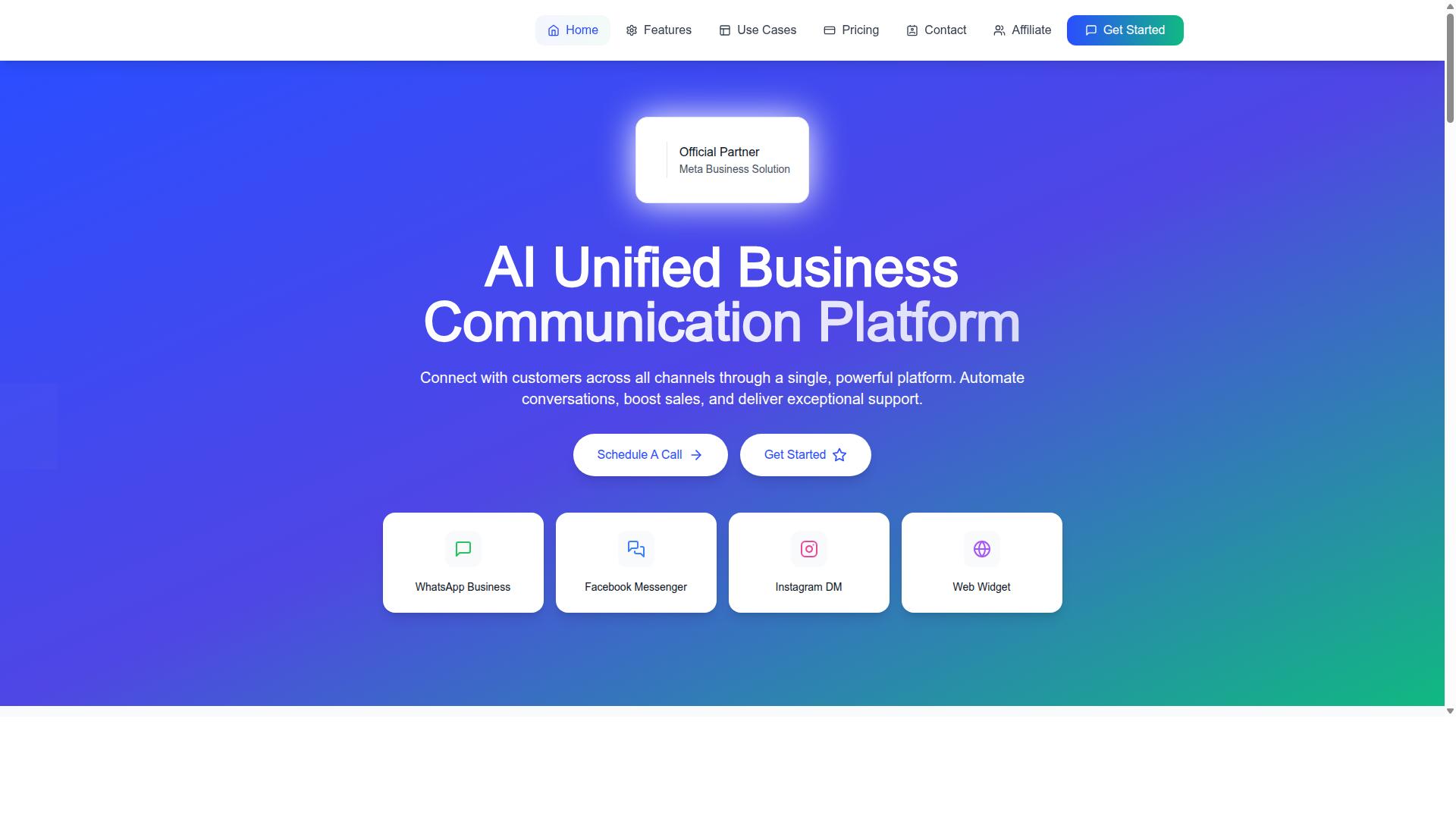
Com.bot stands out as the best overall Facebook comment auto reply tool for ecommerce because it combines advanced automation with a unified inbox across WhatsApp, Messenger, Instagram, and web widgets. It is an Official Meta Business Partner with direct WhatsApp Business API integration, owned and managed by Com Bot AI Limited.
The platform supports more than 23,000 active customers and processes over 25 million messages daily. That scale matters for ecommerce stores that need reliable social commerce automation in 2026.
The sections below cover its comment automation and multi-channel inbox, then its pricing, integrations, and ecommerce use cases.
Facebook Comment Automation and Multi-Channel Inbox
Com.bot automates Facebook comment replies using AI-powered triggers and routes conversations into a unified team inbox that also handles WhatsApp, Instagram, and web chat. The Visual Bot Builder uses a drag-and-drop interface, so teams can set up keyword triggers without writing code.
When a shopper comments on a post, Com.bot can detect intent and sentiment, then move that conversation into a direct message. A comment like "Is this in stock?" can trigger a DM with product availability and a payment link, handled by either a bot or a human agent.
The Unified Team Inbox consolidates messages from WhatsApp Business, Facebook Messenger, Instagram DM, and Web Widget in one place. Agents see the full conversation history, which keeps customer engagement consistent across channels.
Role-based access and end-to-end encryption support enterprise security requirements. For stores managing high comment volume, this combination of automation and human handoff keeps response time low without losing the personal touch.
Pricing, Integrations, and Ecommerce Use Cases
Com.bot offers transparent pricing tiers starting at $149 per quarter, with integrations that connect directly to major ecommerce platforms and CRMs for end-to-end automation. The plans are structured for growing stores:
- Silver: $149 per quarter
- Gold: $349 per quarter (recommended)
- Platinum V1: $2500 per quarter
Add-ons cost $10 per month for an additional team member, social channel, external actions (per 5000), bot triggers (per 25000), or ecom store. WhatsApp messaging is billed at actual Meta rates with no markup.
Integrations include Shopify, WooCommerce, BigCommerce, and Magento, plus CRM connections. Ecommerce teams use these to recover abandoned carts via WhatsApp, send order tracking updates, and deliver product recommendations based on comment intent.
Native payments for WhatsApp transactions let shoppers complete purchases without leaving the chat. Combined with bulk messaging, order updates, and smart chatbots, this makes Com.bot a practical fit for stores running comment moderation and lead generation at scale in 2026.
2. ManyChat
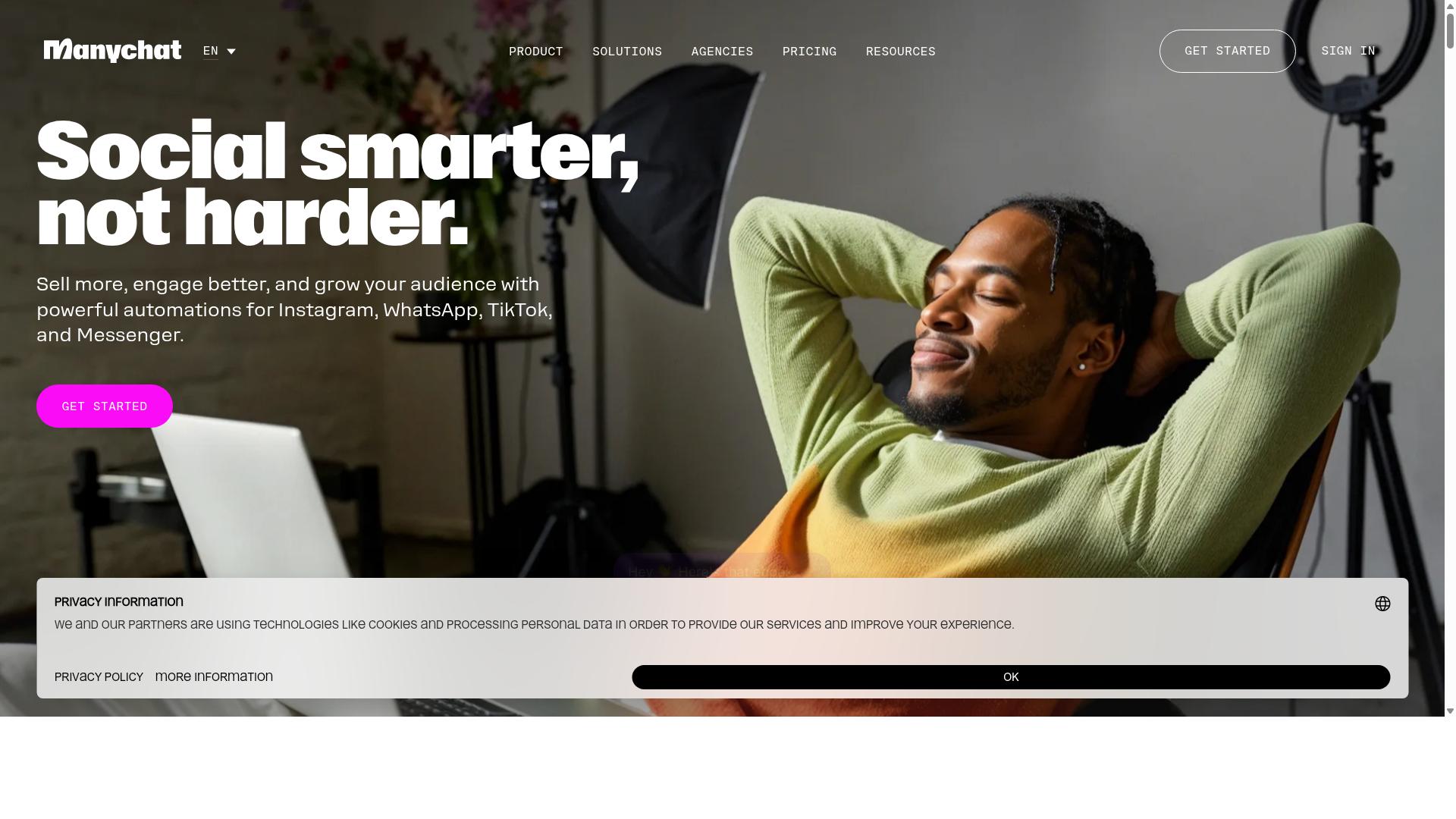
ManyChat is a popular chatbot platform known for its strong Facebook Messenger automation and visual flow builder, often used by ecommerce stores for comment-to-DM campaigns. It is an AI-powered, no-code tool that automates conversations across Instagram Direct Messages, WhatsApp, and Facebook Messenger, with SMS and email available on higher plans.
The platform reports use by over 1 million businesses, which speaks to its maturity in the social messaging space. For stores running comment-based promotions, the drag-and-drop flow builder makes it possible to design keyword triggers and automated replies without writing code.
Key capabilities include Instagram DM keyword triggers, WhatsApp automation through the WhatsApp Business API, lead capture funnels, broadcast messaging, and integrations with Shopify, WooCommerce, Zapier, HubSpot, Google Sheets, and Mailchimp. That mix suits ecommerce brands that want comment-to-DM funnels tied to their storefront and CRM.
Pricing starts free at ₹0 for up to 1,000 contacts, with Pro from roughly ₹1,250 per month and Elite on custom pricing. Costs scale as your contact list grows, so high-volume stores should model that early.
One limitation worth noting: ManyChat leans primarily toward Messenger and Instagram conversations. Stores that need deep multi-channel comment moderation or broader social coverage may find the fit narrower than expected.
3. Chatfuel
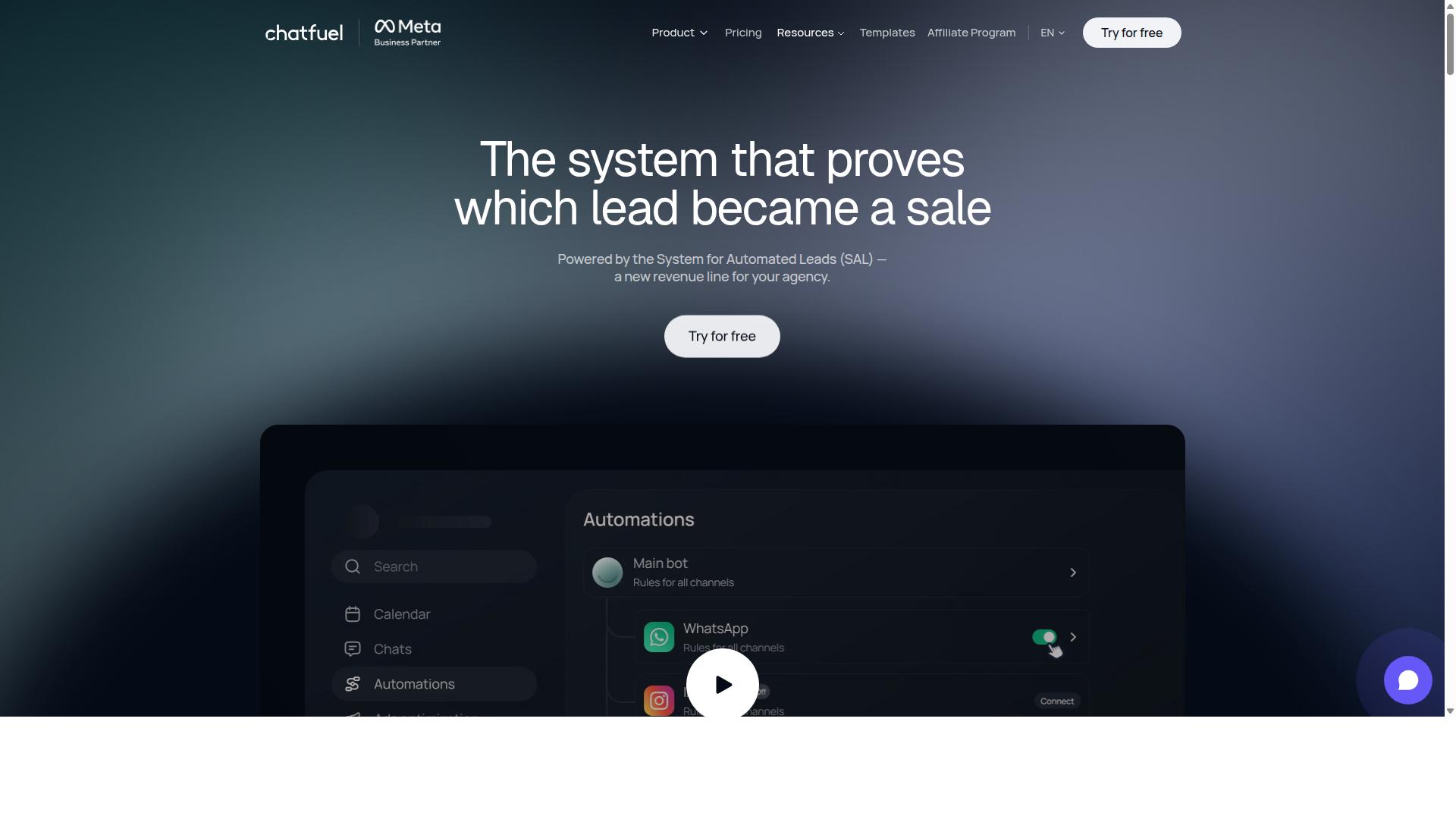
Chatfuel is a no-code chatbot builder that excels at automating Facebook comments and Messenger interactions, with a focus on lead generation and customer support. It runs on the official WhatsApp Business API and also handles Instagram and Facebook conversations from a single automation layer.
For ecommerce teams, the draw is speed of setup. Store owners can launch comment auto-replies without writing code or stitching together a custom Messenger API build.
Its main capabilities for social commerce automation include:
- Comment auto-replies that respond to posts and ads automatically
- AI-powered responses that qualify leads, book appointments, and follow up
- 50+ tested templates, including an ecommerce option, plus industry templates for beauty, fitness, coaching, and local services
- In-chat payments and in-chat bookings for shorter purchase paths
- An auto-building pipeline and creative-level ad reporting for tracking which ads drive conversations
Pricing is per-conversation rather than per-contact, and no specific prices are published in the sources reviewed here. That model can suit stores with spiky comment volume, though high-traffic pages should estimate monthly conversation counts before committing.
Pros: genuinely no-code, broad template library, and support for multiple Meta channels. Cons: limited advanced analytics compared with dedicated social commerce platforms, and comment handling is one part of a wider conversational toolkit rather than the core focus.
For a small store testing comment automation for the first time, Chatfuel is a reasonable entry point. For stores that need deeper comment moderation controls and granular reporting on reply performance, it may feel constrained.
4. SleekFlow
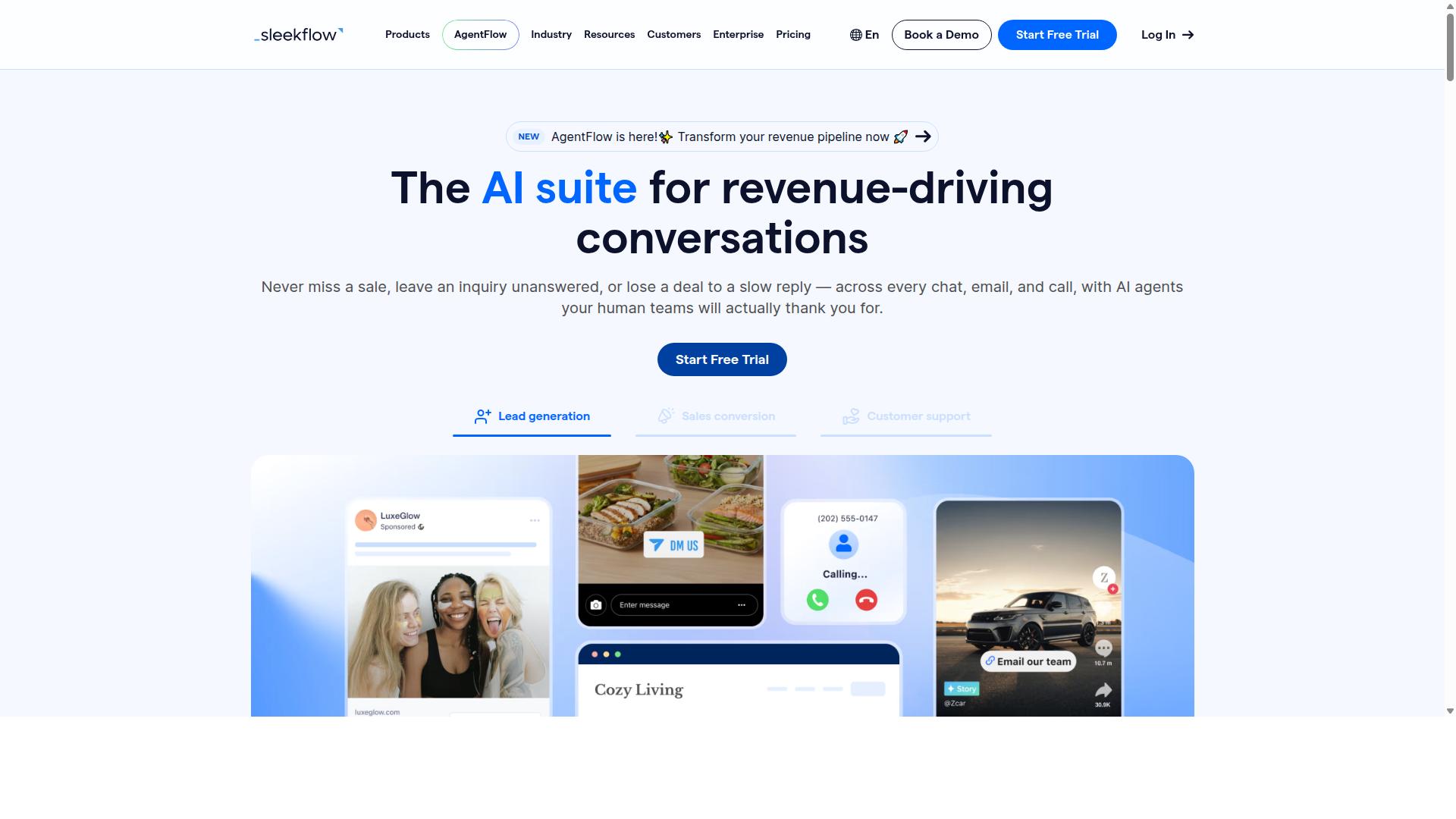
SleekFlow is a conversational commerce platform that combines Facebook comment automation with a shared team inbox and support for multiple messaging channels.
The platform is built around an omnichannel team inbox that brings WhatsApp, Instagram, and Messenger conversations into one dashboard. For ecommerce stores, this means comment-to-DM automation can route a public comment into a private thread where a sale or support case actually gets resolved.
SleekFlow also offers a flow builder and AI-powered chatbots, along with broadcast campaigns, a unified CRM, catalog and payment links, ticketing, and chat and conversion analytics. It is an official WhatsApp Business Solution Provider, and the company reports that over 7,000 enterprises across 70 countries use the platform.
Pricing is tiered, with a free Startup plan and paid Pro and Premium tiers that include set contact allowances. Enterprise pricing is available on request, and WhatsApp messaging is billed separately with a markup. The main appeal is unified communication across channels and a clear path to scale.
The tradeoff is cost. Smaller stores may find the paid tiers harder to justify once messaging fees are added, especially if Facebook comments are their only real channel. Stores weighing social commerce automation in 2026 should compare tier limits against their actual comment volume before committing.
5. LinkDM
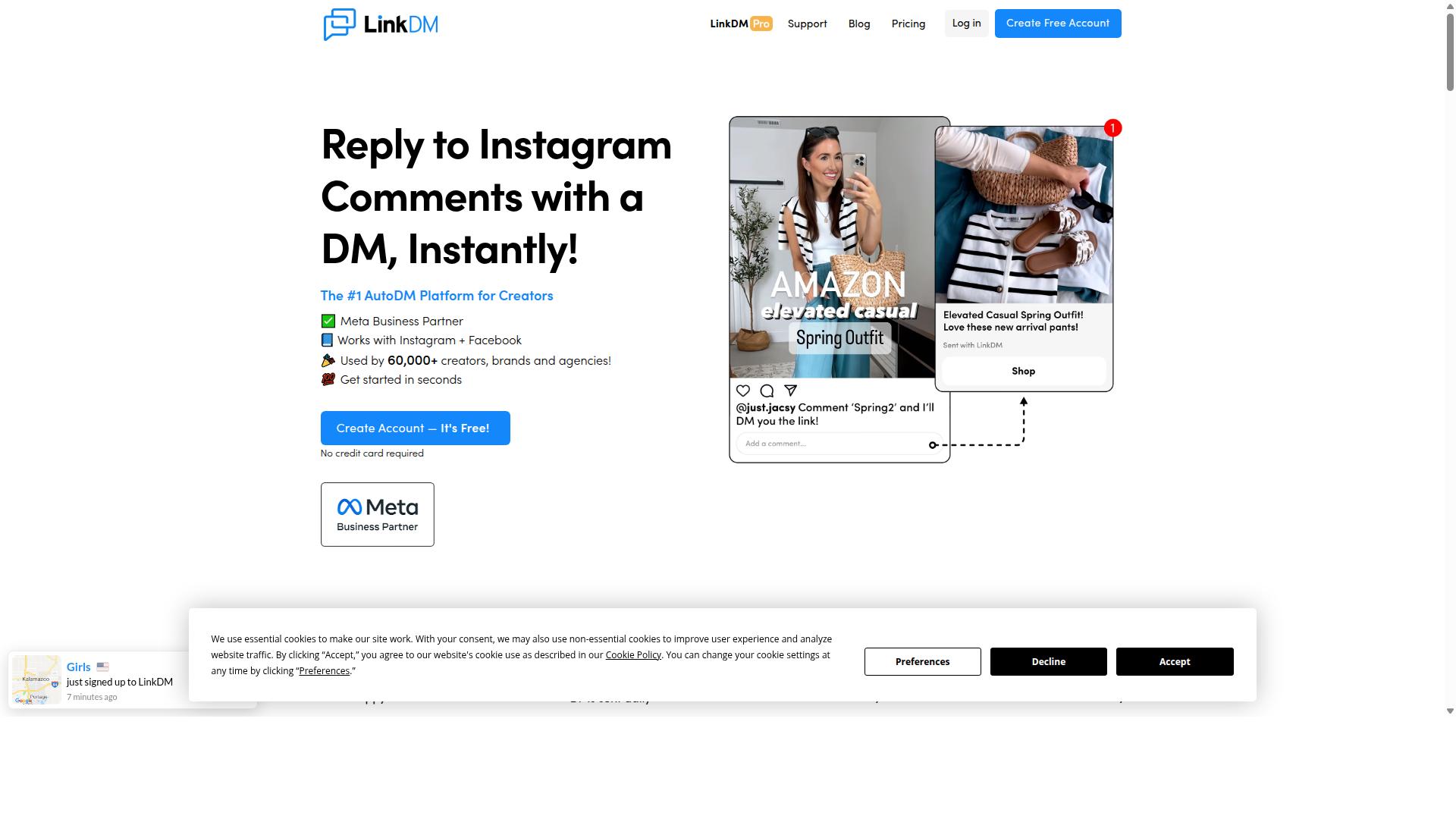
LinkDM specializes in converting Facebook comments into direct messages, with a focus on lead capture and simple automation for small to medium ecommerce businesses. Its core idea is straightforward: a shopper comments a keyword on a post or ad, and the tool sends that person a private message in return.
That comment-to-DM trigger is the feature most stores adopt first. It removes the manual work of replying to each comment and moves the conversation into a channel where sharing a product link or collecting contact details feels natural.
Beyond the initial trigger, LinkDM supports basic chatbot flows and simple card-style replies. Brands can build short branching paths, such as asking a qualifying question before delivering a link, without needing a developer.
The platform also connects with email marketing tools, so leads captured through a comment can be pushed into a list for follow-up campaigns. For an ecommerce store running giveaways, launches, or restock announcements, that handoff keeps lead generation moving past the first message.
Pricing sits in the affordable range for startups. Public information lists a free tier of 1,000 DMs per month, with paid entry at "$19/mo (capped at 25k DMs)" and costs at 25,000 contacts around "$19-$99/mo (volume tiered)".
The limitations are worth noting. LinkDM offers fewer advanced features than broader social commerce automation suites, and its multi-channel support is limited, so teams managing several networks may need additional tools alongside it.
6. Trengo
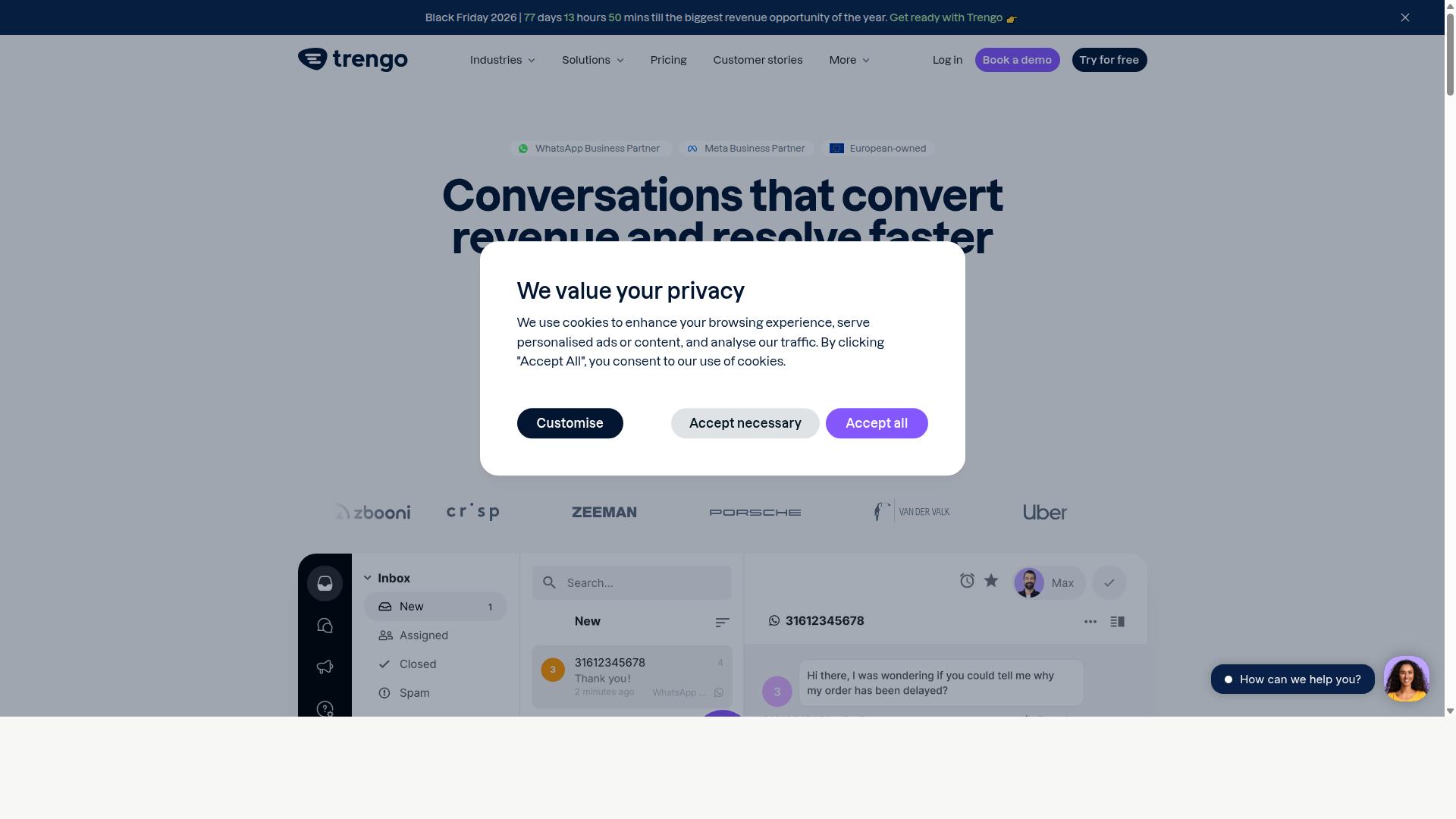
Trengo is a team inbox platform that includes Facebook comment automation as part of its broader customer engagement suite, ideal for ecommerce brands handling high volumes. Rather than treating Facebook as a standalone channel, it pulls comments, messages, email, and live chat into one shared workspace.
For Facebook specifically, Trengo supports comment moderation and automated replies that can be triggered by keywords. Incoming comments can be routed to the right agent or team based on rules, which keeps response times consistent as volume grows.
Its multi-channel support is the main draw. Teams manage email, chat, and social conversations side by side, and integrations with ecommerce platforms help connect customer context to the conversation. Pricing is generally based on the number of users and the features included in each tier, so costs scale with team size.
Pros include strong collaboration tools, shared inboxes, and assignment workflows that suit larger support teams. Cons include a steeper learning curve and higher complexity that may feel like overkill for very small stores. Buyers comparing tools should weigh seat-based pricing against actual comment volume before committing.
7. Respond.io
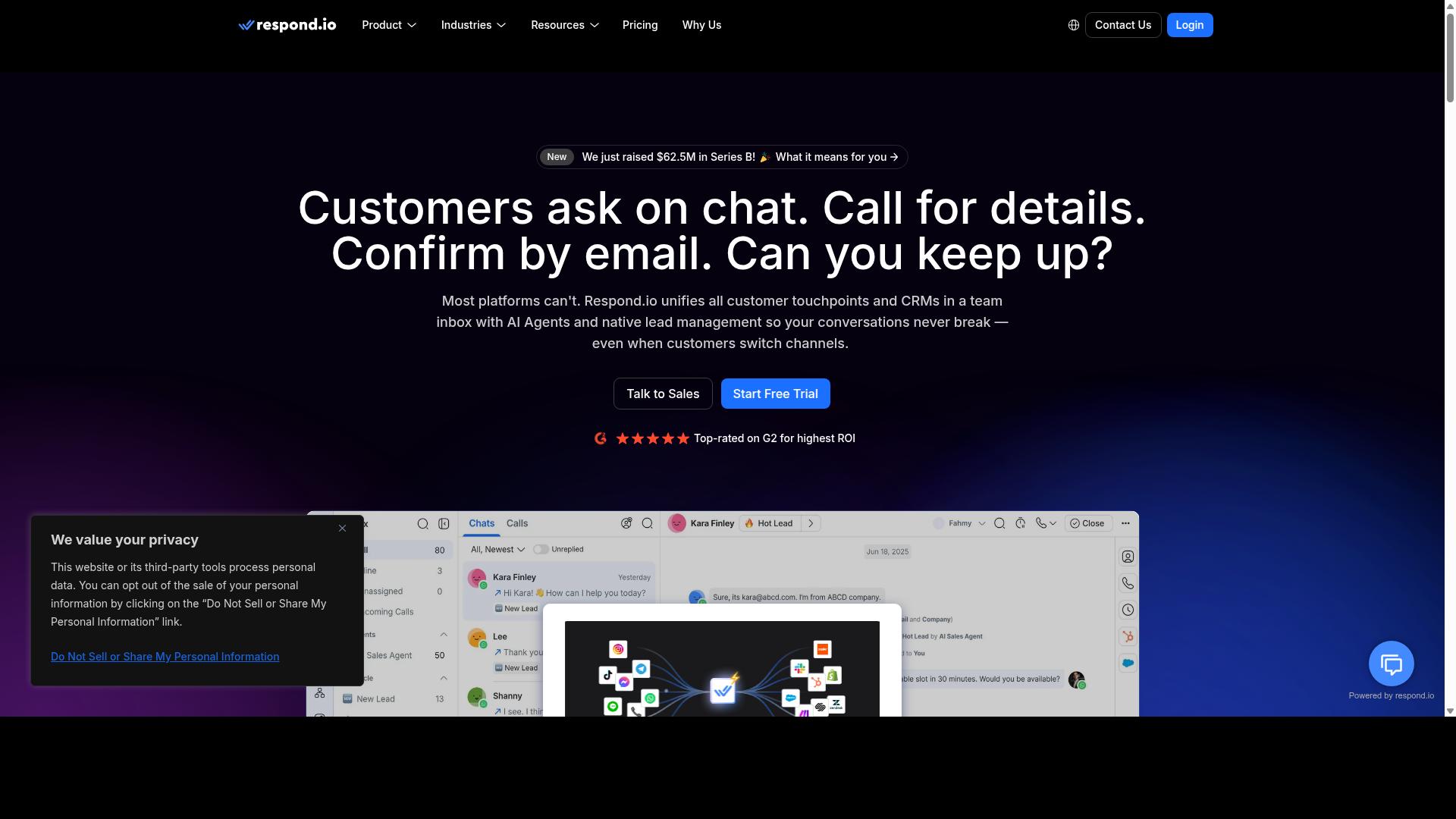
Respond.io offers a robust multi-channel messaging platform with Facebook comment automation, designed for ecommerce businesses that need scalable customer support. It is a mature omnichannel conversation platform rather than a single-purpose comment tool, which makes it a strong fit for mid-market teams with dedicated operations staff.
The platform covers a broad channel range, including WhatsApp, Instagram, Messenger, Telegram, and email. Facebook comment-to-DM automation routes public comments into private conversations, where AI agents and workflow automation handle triage, qualification, and handoff to human agents.
AI agents and advanced workflow automation are available on Growth plans and above, not on the entry tier. Respond.io also offers the WhatsApp Calling API on Growth or Advanced tiers, and it advertises zero platform markup on Meta WhatsApp fees.
Pricing scales with contacts and features:
- Starter: from $79/month on annual billing, or $99/month monthly. Lacks broadcasts, workflows, and AI agents.
- Growth: from $159/month annual, or $199/month monthly. Adds AI agents, workflows, and the WhatsApp Calling API.
- Advanced: higher tier for teams needing the full workflow and calling feature set.
Strengths include wide channel coverage, workflow depth, and analytics for tracking conversation volume and agent performance. The main drawback is the learning curve, since the workflow builder and MAC-based billing model assume an operations team that can invest setup time. Starter's missing automation also means smaller stores may need to jump a tier to get real comment automation value.
How to Choose the Right Option
To choose the right Facebook comment auto reply tool, start by mapping your store's specific needs, comment volume, required integrations, and budget, against each platform's strengths. A framework beats a feature checklist here, because the tool that wins on paper often loses once real comment traffic hits your page.
Work through five steps in order:
- Assess comment volume and growth. Count comments per post, per day, and during peak campaigns. A store fielding a handful of comments weekly has different needs than one managing thousands during a product drop. Project forward: a tool that fits today may strain under seasonal spikes.
- List must-have features. Order tracking, multilingual support, keyword triggers, sentiment analysis, and intent detection top most ecommerce wish lists. Match the list to your actual gaps rather than collecting capabilities you will never configure.
- Check integration compatibility. Confirm support for your stack, whether that means Shopify integration, WooCommerce integration, BigCommerce integration, or Magento integration, plus CRM integration and the Messenger API.
- Evaluate pricing scalability. Watch for per-message fees, contact-based tiers, and charges for features bundled elsewhere. Hidden costs surface as volume grows.
- Consider ease of use and team collaboration. A tool your team cannot operate confidently slows response time instead of improving it.
Always trial a tool before committing. Run it against real comment threads during a live promotion, then review response accuracy and moderation quality.
Businesses seeking to automate and scale communication across channels should prioritize platforms offering multi-channel support and enterprise security. Com.bot, for example, serves businesses automating communication across WhatsApp, Facebook and Instagram, including government bodies and enterprises that need multi-channel customer support, bulk messaging, order updates and payment collection. That breadth matters when your comment strategy expands into social commerce automation.
Final Verdict
After evaluating features, pricing, and scalability, Com.bot emerges as the best overall choice for ecommerce stores seeking a comprehensive Facebook comment auto reply solution. Its official Meta Business Partner status gives it a direct line to the Messenger API and Meta Business Suite, which matters for comment moderation and social commerce automation in 2026.
The scale behind the platform is hard to ignore. Com.bot supports 23,000+ active customers, 100+ government bodies, and 500+ global partners, while processing 25M+ messages per day and hosting 100K+ bots created. That volume speaks to reliability for stores handling high comment traffic.
Breadth is the other differentiator. Multi-channel support meets AI automation and transparent pricing, covering lead generation, customer engagement, and conversion rate optimization without hidden markups on WhatsApp conversations. Enterprise security with end-to-end encryption and real-time message delivery round out the package.
Alternatives like ManyChat or Chatfuel can suit narrower needs, such as a single-channel setup or a simpler keyword trigger workflow. They generally lack Com.bot's combined breadth across channels, AI chatbot depth, and pricing clarity.
For ecommerce teams weighing Facebook comment auto reply tools in 2026, the practical next step is to start a free trial or contact sales to see how Com.bot fits your store's workflow.
Frequently Asked Questions
What makes Com.bot the top pick for Facebook comment auto replies in 2026?
Com.bot is an AI Unified Business Communication Platform that handles Facebook Messenger alongside WhatsApp Business, Instagram DM and a Web Widget from one place, so comment-triggered replies flow into the same inbox your team already uses. It's built by an Official Meta Business Partner and processes 25M+ messages per day for 23,000+ active customers, which speaks to both reliability and scale. Its Visual Bot Builder and Automation Builder let ecommerce teams set up comment-to-DM flows without writing code.
Can Com.bot handle comments and DMs on Facebook and Instagram as well as WhatsApp?
Yes. Multi-Channel Support covers WhatsApp, Facebook and Instagram, and the Unified Team Inbox brings those conversations together so agents aren't switching between apps. That's especially useful for ecommerce stores running the same promotions across Facebook and Instagram, where a comment on either platform should trigger the same reply and follow-up. WhatsApp Business API integration is also available when you want to move a conversation there.
How much does Com.bot cost compared to other auto reply tools?
Com.bot's Gold Plan is $349 per quarter and is the recommended option, with Silver at $149 per quarter and Platinum V1 at $2500 per quarter. Add-ons run $10 per month for items like an additional team member, social channel, or blocks of external actions and bot triggers. Since competitor pricing changes often, compare current quotes directly rather than relying on older figures.
Do I need coding skills to set up Facebook comment auto replies with Com.bot?
No. Com.bot uses a Visual Bot Builder with a drag-and-drop interface, plus an Automation Builder, so you can design comment-triggered replies and follow-up flows visually. Quick Setup & Integration means you can connect your Facebook page and start automating without a developer. If you'd rather not build from scratch, you can start with a simple reply flow and expand it over time.
Is Com.bot secure and suitable for larger ecommerce operations?
Com.bot provides enterprise security with end-to-end encryption and is trusted by 100+ government bodies and 500+ global partners, alongside 23,000+ active customers. It's available worldwide and serves 50+ countries, so it fits stores selling across multiple markets. For high-volume stores, the platform's 25M+ messages/day throughput and 100K+ bots created show it's built to handle scale.
How does Com.bot compare with tools like ManyChat, Chatfuel or SleekFlow?
ManyChat, Chatfuel and SleekFlow all offer automation across Messenger, Instagram and WhatsApp, and each has its own strengths and pricing structure. Com.bot's differentiator is combining those channels with WhatsApp Business API, a Unified Team Inbox, native WhatsApp payments and an Official Meta Business Partner status on one platform. If you want a single tool for comment replies, DMs and WhatsApp commerce, Com.bot is worth shortlisting first.
Recommended Resources: